Skip to main content




Patients often ask about NK Cell and T Cell almost interchangeably, unsure whether these two immune cells do the same job or something different. Today, let’s break down NK Cell vs T Cell in plain terms – what is an NK Cell, what is a T Cell, how each one works, and what you can do to keep both functioning well.
What is an NK Cell and how does it protect the body?
An NK Cell, short for natural killer cell, belongs to the innate immune system – the body’s first line of defense. Unlike some immune cells that need prior exposure to a specific pathogen before they can respond, an NK Cell can recognize and destroy virus-infected cells or abnormal cells the moment it detects them.
Think of an NK Cell as a patrol unit constantly circulating through the body, ready to act without waiting for instructions. That speed makes the NK Cell especially important in catching problems early, before they have a chance to spread.
What is a T Cell and how does it protect the body?
A T Cell belongs to the adaptive immune system, and it matures in the thymus – which is actually where the name comes from. Unlike an NK Cell, a T Cell needs a pathogen’s antigen to be presented to it first before it can respond and take action.
There are several types of T Cell, most notably helper T Cells (CD4), which coordinate and activate other immune cells, and cytotoxic T Cells (CD8), which destroy targeT Cells directly. A defining feature of the T Cell is its ability to form immune memory, allowing the body to respond faster and stronger the next time it meets the same pathogen.
NK Cell vs T Cell: what are the key differences?
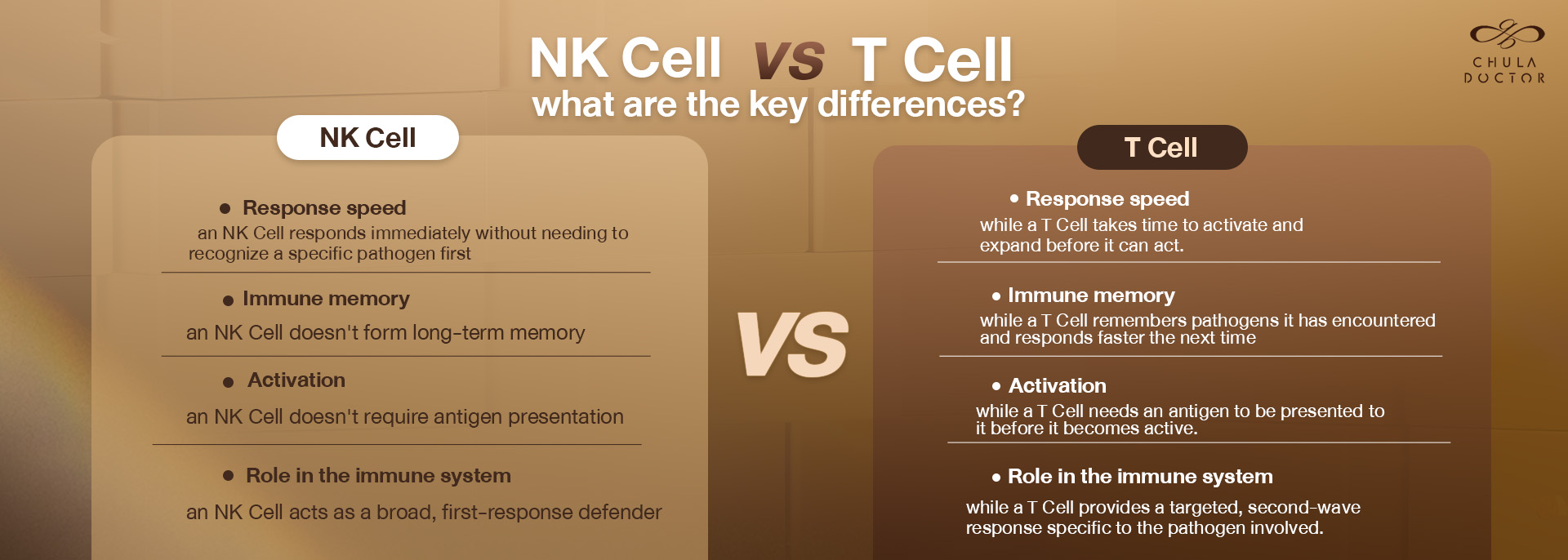
Comparing NK Cell vs T Cell overall, both work to eliminate infected or abnormal cells, but the way each one operates is quite different.
- Response speed – an NK Cell responds immediately without needing to recognize a specific pathogen first, while a T Cell takes time to activate and expand before it can act.
- Immune memory – an NK Cell doesn’t form long-term memory, while a T Cell remembers pathogens it has encountered and responds faster the next time.
- Activation – an NK Cell doesn’t require antigen presentation, while a T Cell needs an antigen to be presented to it before it becomes active.
- Role in the immune system – an NK Cell acts as a broad, first-response defender, while a T Cell provides a targeted, second-wave response specific to the pathogen involved.
Why does the body need both NK Cell and T Cell activity?
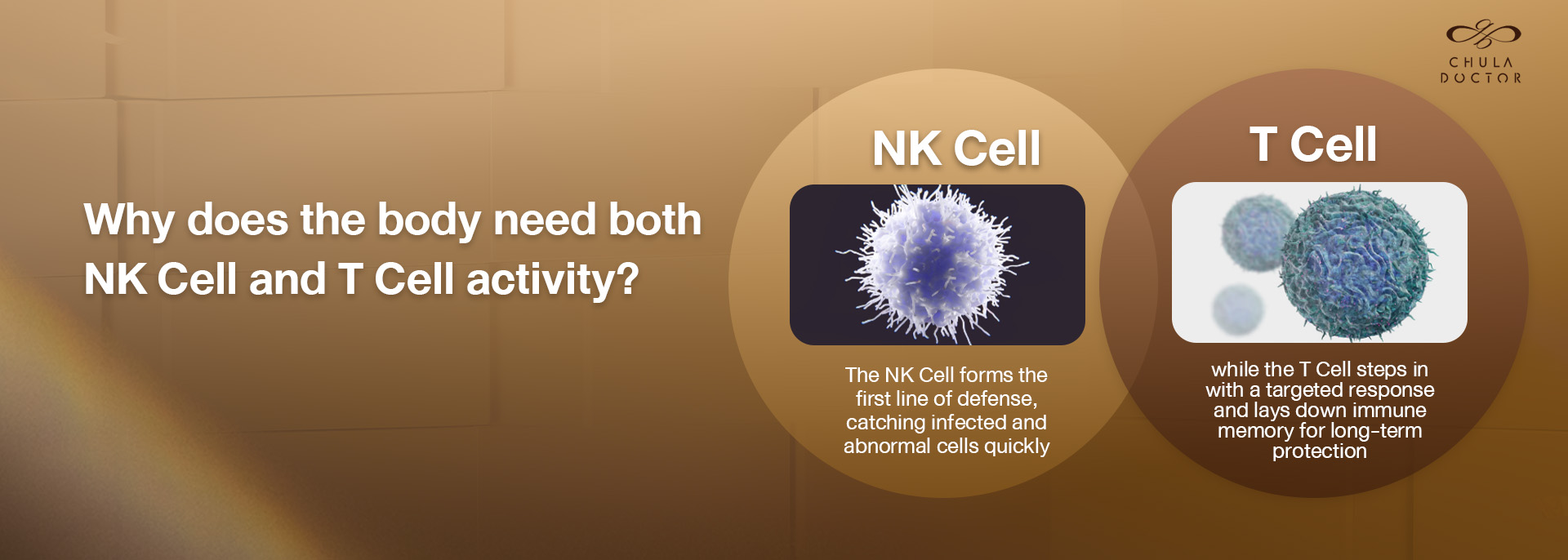
A strong immune system depends on NK Cell and T Cell activity working together, not competing for importance. The NK Cell forms the first line of defense, catching infected and abnormal cells quickly, while the T Cell steps in with a targeted response and lays down immune memory for long-term protection. Without either one working properly, the body’s ability to fight off infection and abnormal cell growth is compromised.
How can you support NK Cell and T Cell activity day to day?
The factors that weaken NK Cell and T Cell activity tend to overlap, so the same everyday habits help protect both.
- Sleep 7-8 hours a night on a consistent schedule.
- Manage stress – chronic stress raises cortisol, which directly suppresses immune cell function.
- Eat antioxidant-rich foods – leafy greens, berries, and fatty fish.
- Cut back on alcohol and quit smoking, both of which damage immune cells directly.
- Exercise regularly, but avoid overtraining without adequate recovery, which can suppress immunity too.
If you’re doing all of this and still getting sick often or feeling persistently run down, that’s a sign it’s time to check your NK Cell and T Cell levels with a doctor.
Fun fact: How NK Cell and T Cell Research Shape Modern Cancer Treatment
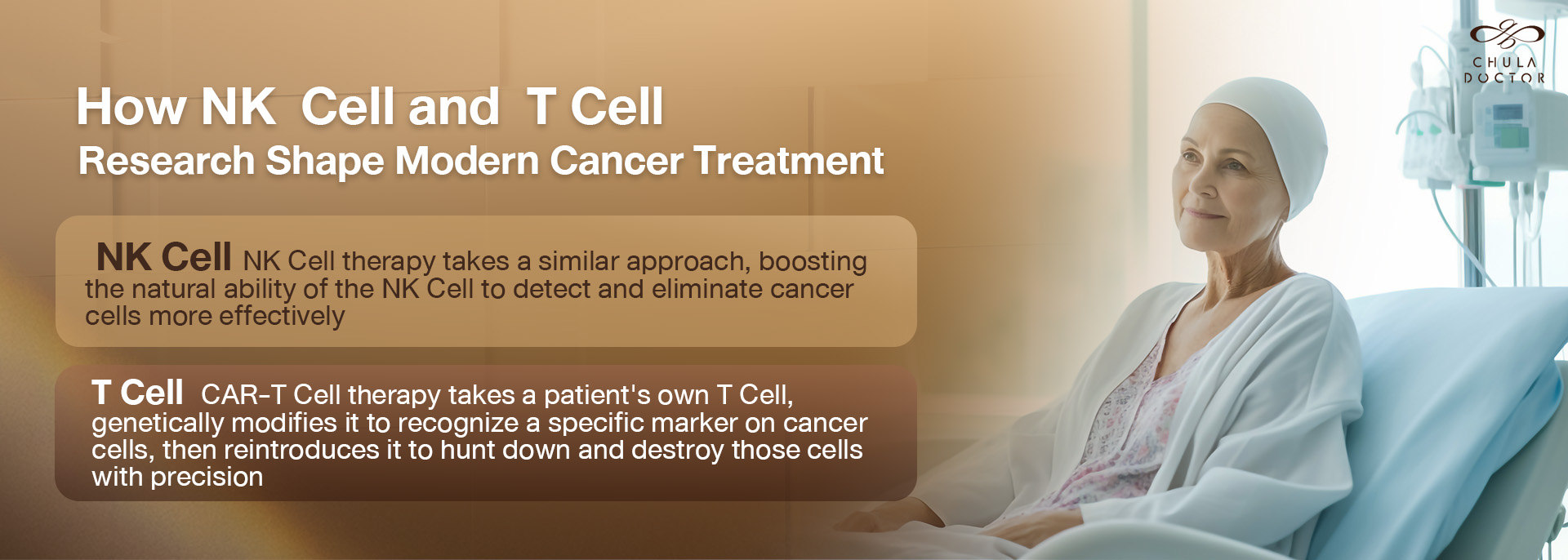
The unique abilities of NK Cell and T Cell have become the foundation for some of today’s most advanced cancer therapies. CAR-T Cell therapy takes a patient’s own T Cell, genetically modifies it to recognize a specific marker on cancer cells, then reintroduces it to hunt down and destroy those cells with precision. NK Cell therapy takes a similar approach, boosting the natural ability of the NK Cell to detect and eliminate cancer cells more effectively. Both treatments are proof that the basic biology behind NK Cell vs T Cell isn’t just theory, it’s actively being used to save lives today.
Frequently Asked Questions About NK Cell vs T Cell
NK Cell vs T Cell – which one matters more?
Neither matters more than the other; they simply play different roles. An NK Cell is essential for a fast, early response to infected or abnormal cells, while a T Cell is essential for a targeted response and long-term immune memory. The body needs both working together.
How are NK Cell and T Cell levels tested?
Testing is done through a blood draw that analyzes the types and quantities of immune cells present. This helps doctors assess whether immune function is normal, weakened, or in need of further support.
Is weak immunity more related to NK Cell or T Cell activity?
It can involve both, since they function as a connected system. Low NK Cell activity slows the body’s early response to infection, while low T Cell activity means the body doesn’t recognize and respond to familiar pathogens as effectively as it should.
Summary
NK Cell vs T Cell isn’t a competition over which matters more – they’re two immune cells that work as a team. An NK Cell is the fast-acting first responder against infected and abnormal cells, while a T Cell provides a targeted response and builds lasting immune memory. Good sleep, stress management, and a healthy diet are the best starting points for supporting both. But if frequent illness or low energy persists, checking your NK Cell and T Cell levels with a doctor can help restore lasting immune strength.