Skip to main content




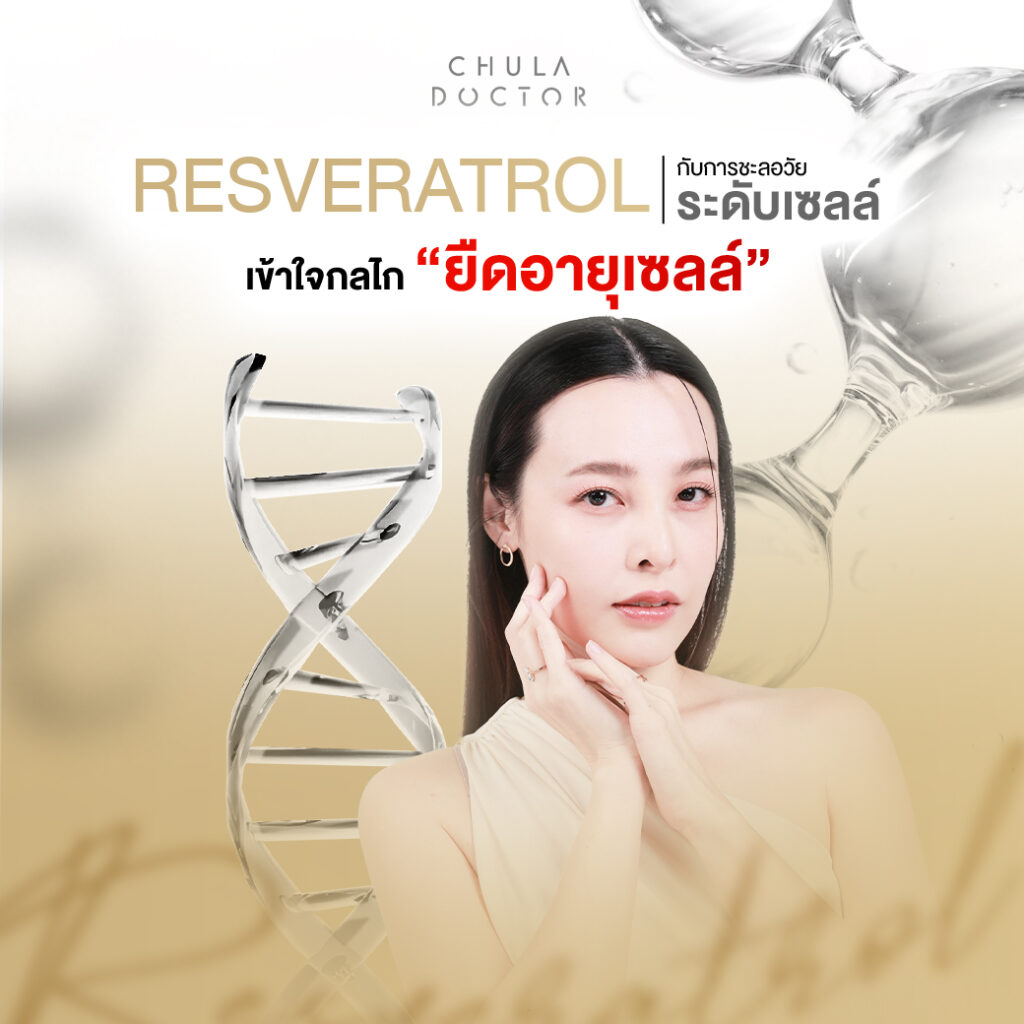
In 2025, Resveratrol has gained increasing recognition as a key natural compound for supporting healthy aging at the cellular level. It is widely discussed for its potential to promote cellular longevity, as more people are shifting their focus from merely looking good on the outside to maintaining health from within. Among the many compounds being studied for anti-aging, Resveratrol has become one of the most promising and extensively researched due to its potential role in supporting cellular health and longevity.
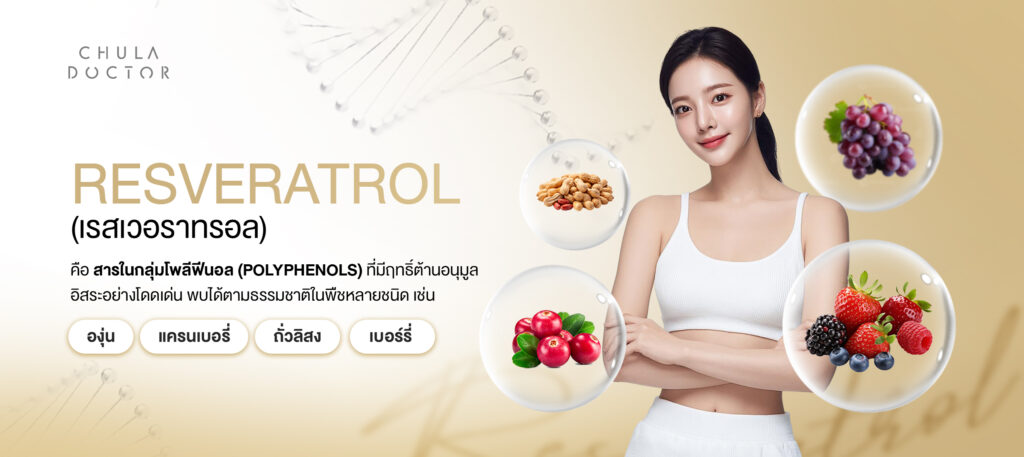
What Is Resveratrol?
Resveratrol is a naturally occurring polyphenol with potent antioxidant properties. It is found in a variety of plants, including red grapes, berries, peanuts, and cranberries.
Among these sources, the skin of red grapes contains one of the highest concentrations of Resveratrol.
Resveratrol has attracted significant attention from researchers worldwide because studies suggest it may help protect cells from oxidative damage and age-related decline. It is also believed to play a key role in cellular anti-aging, making it one of the most extensively studied compounds in longevity research.
Natural Forms of Resveratrol
Naturally occurring Resveratrol exists in two primary forms:
- Trans-Resveratrol: The more stable and biologically active form. It is better absorbed by the body and is considered the form responsible for most of Resveratrol’s health benefits.
- Cis-Resveratrol: Formed when Trans-Resveratrol is exposed to light or heat. This form is less stable and generally considered to have lower biological activity.
Benefits of Resveratrol
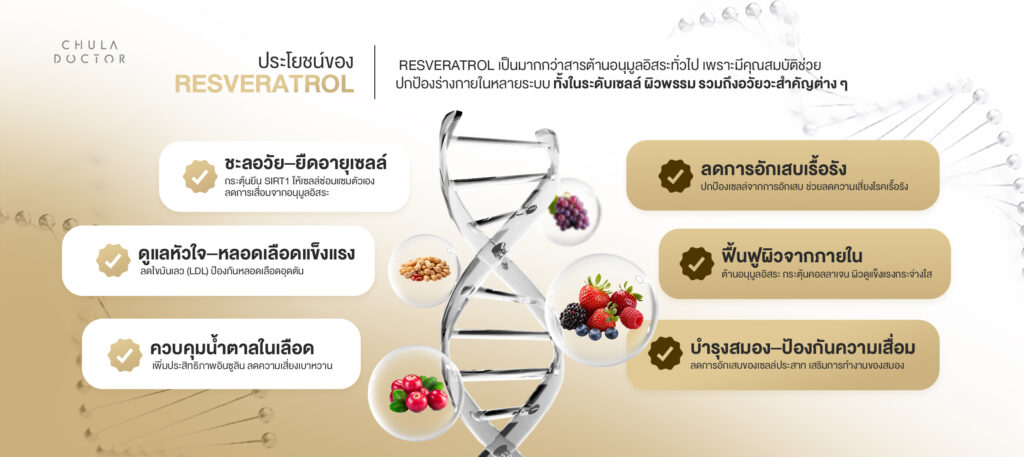
Resveratrol is more than just an antioxidant. It helps protect the body in many ways, including at the cellular level, as well as supporting skin health and various vital organs.
Helps slow aging and extend cellular lifespan: Resveratrol activates the SIRT1 gene, which is associated with cellular longevity. This helps cells repair themselves more effectively, reduces damage caused by free radicals, and helps maintain a more youthful-looking skin.
Supports brain and nervous system health: Research has found that Resveratrol may help reduce inflammation in the brain and slow the degeneration of nerve cells, which is associated with Alzheimer’s disease and Parkinson’s disease.
Supports cardiovascular health: Resveratrol helps reduce the accumulation of low-density lipoprotein (LDL) cholesterol and helps prevent blood vessel blockage, thereby reducing the risk of heart disease and high blood pressure.
Helps regulate blood sugar levels: This compound helps improve insulin sensitivity and enables the body to process glucose more efficiently, making it beneficial for people at risk of diabetes.
Helps reduce chronic inflammation: Resveratrol acts as a protective shield by helping reduce ongoing inflammation in the body, which is one of the major causes of many chronic diseases, including diabetes, hypertension, and certain types of cancer.
Supports weight management: Although Resveratrol does not directly promote weight loss, it activates the SIRT1 and AMPK genes involved in metabolism. This helps improve fat metabolism and energy utilization, making it beneficial for weight management.
Helps rejuvenate the skin from within: Resveratrol helps fight free radicals that contribute to dark spots, freckles, and premature wrinkles, while also stimulating collagen production to promote healthier, brighter-looking skin.
Who Is Resveratrol Suitable For?
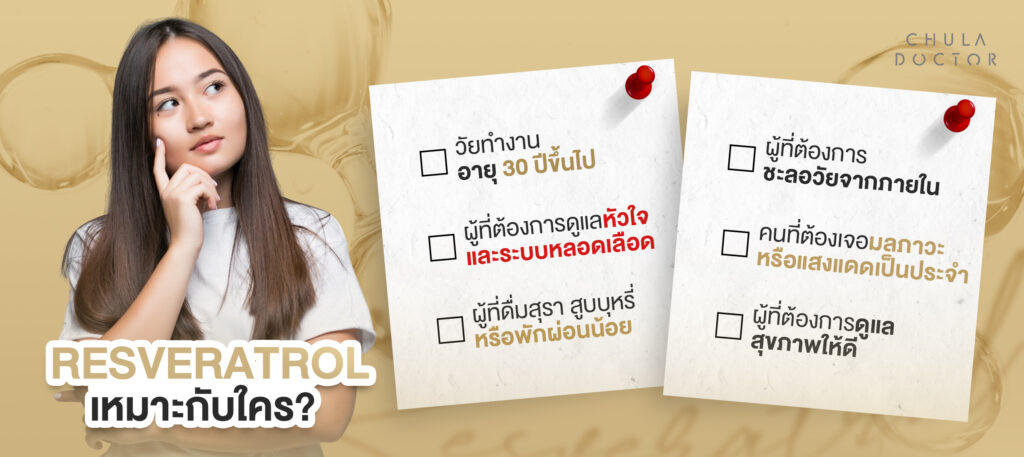
Adults Aged 30 and Above
This is the stage when the body begins to experience cellular aging, and the skin may gradually lose its youthful appearance. Resveratrol helps support cellular repair, restore mitochondrial energy, and reduce fatigue caused by stress or lack of sleep.
People Who Are Regularly Exposed to Pollution or Sunlight
UV rays and environmental pollution generate free radicals that can damage the skin. Resveratrol helps reduce inflammation and protect skin cells from damage, making it suitable for people who want to help prevent wrinkles, dark spots, freckles, and dull-looking skin.
People Who Want to Support Heart and Cardiovascular Health
Resveratrol helps reduce low-density lipoprotein (LDL) cholesterol and protect blood vessels from inflammation. It is suitable for people who are at risk of heart disease, high blood pressure, or high cholesterol.
People Who Want to Slow the Aging Process from Within
If you are interested in longevity, anti-aging, or cellular rejuvenation, Resveratrol is one of the most extensively researched compounds for supporting cellular longevity through the SIRT1 gene and the AMPK pathway.
People Who Drink Alcohol, Smoke, or Get Too Little Sleep
These people are at a higher risk of oxidative stress, which is caused by an excess of free radicals. Resveratrol helps reduce the burden on the liver and metabolic system while supporting the recovery of damaged cells.
Who Should Use Resveratrol with Caution?
- People taking blood-thinning medications, such as Warfarin.
- People who are pregnant or breastfeeding should consult a healthcare professional before use.
- Avoid taking Resveratrol with excessive amounts of alcohol.
Conclusion: Resveratrol – Nature’s Anti-Aging Compound
Resveratrol is a powerful antioxidant that helps support healthy aging at the cellular level. It is naturally found in red grape skins, berries, peanuts, and red wine. Resveratrol helps support cellular repair and protect cells from age-related damage, while promoting youthful-looking skin and supporting heart health and overall well-being. It is an excellent choice for people who want to maintain their health from within for the long term.