Skip to main content




NK Cell Therapy
Natural Killer Cells
Immune Cell Therapy
Nowadays, more people focus on preventive healthcare and long-term wellness, understanding how the body’s natural defenses work has become increasingly important. One of the immune system’s most powerful protectors is the Natural Killer (NK). It is a specialized type of white blood cell that acts as the body’s first line of defense, quickly recognizing and eliminating virus-infected and abnormal cells.
In this article, you’ll get to know what NK cells are, how they support your immune system, what factors can affect their function, and simple ways to help keep your body’s natural defenses strong.
What Is NK Cell?
A Natural Killer (NK) cell is a type of white blood cell that belongs to the body’s innate immune system. It plays a critical role in the body’s early immune response, serving as one of the first lines of defense against infections and abnormal cells.
The primary function of an NK cell is to identify and eliminate abnormal cells, such as virus-infected cells and cells that have undergone abnormal changes. It responds quickly to help control infections and reduce the accumulation of abnormal cells. By performing these functions, an NK cell helps maintain a balanced immune system and supports overall long-term health.
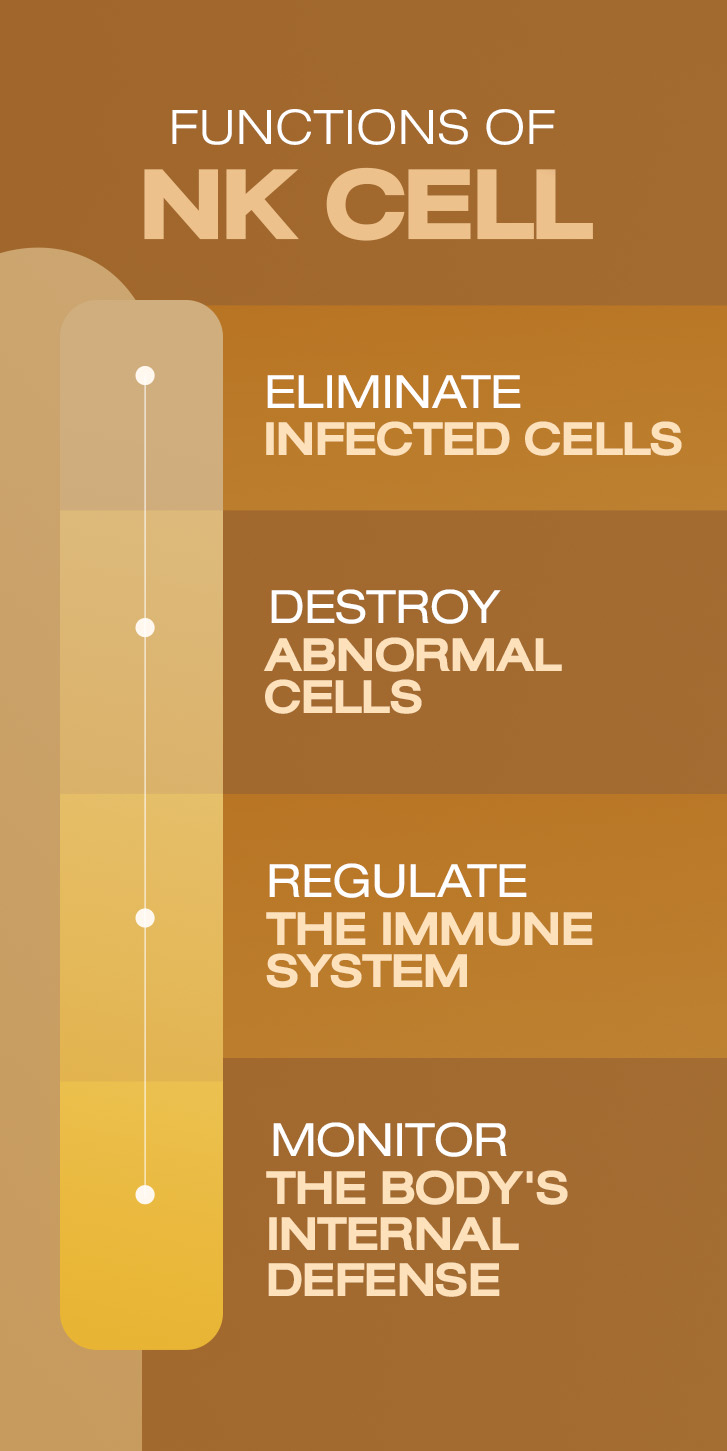
NK Cell Functions
1. Eliminates Infected Cells
An NK cell plays a key role in identifying and eliminating virus-infected cells during the early stages of infection. It recognizes cells that have been taken over by viruses and destroys them rapidly. This helps limit the spread of infection and allows other components of the immune system to respond more effectively.
2. Eliminates Abnormal Cells
An NK cell continuously monitors the body for abnormal cells, including cells with genetic mutations or other abnormal changes that may contribute to disease. By removing these cells, it helps prevent their accumulation and supports the body’s long-term health.
3. Regulates the Immune Response
In addition to eliminating target cells, an NK cell releases immune signaling molecules called cytokines, which help activate and regulate other immune cells. This coordinated response helps keep the immune system balanced, preventing both excessive inflammation and an insufficient immune response.
4. Provides Continuous Immune Surveillance
An NK cell acts as part of the body’s natural surveillance system by continuously monitoring cells for signs of infection or abnormal changes. When a threat is detected, it responds immediately, helping the body address potential problems at an early stage before they can progress.
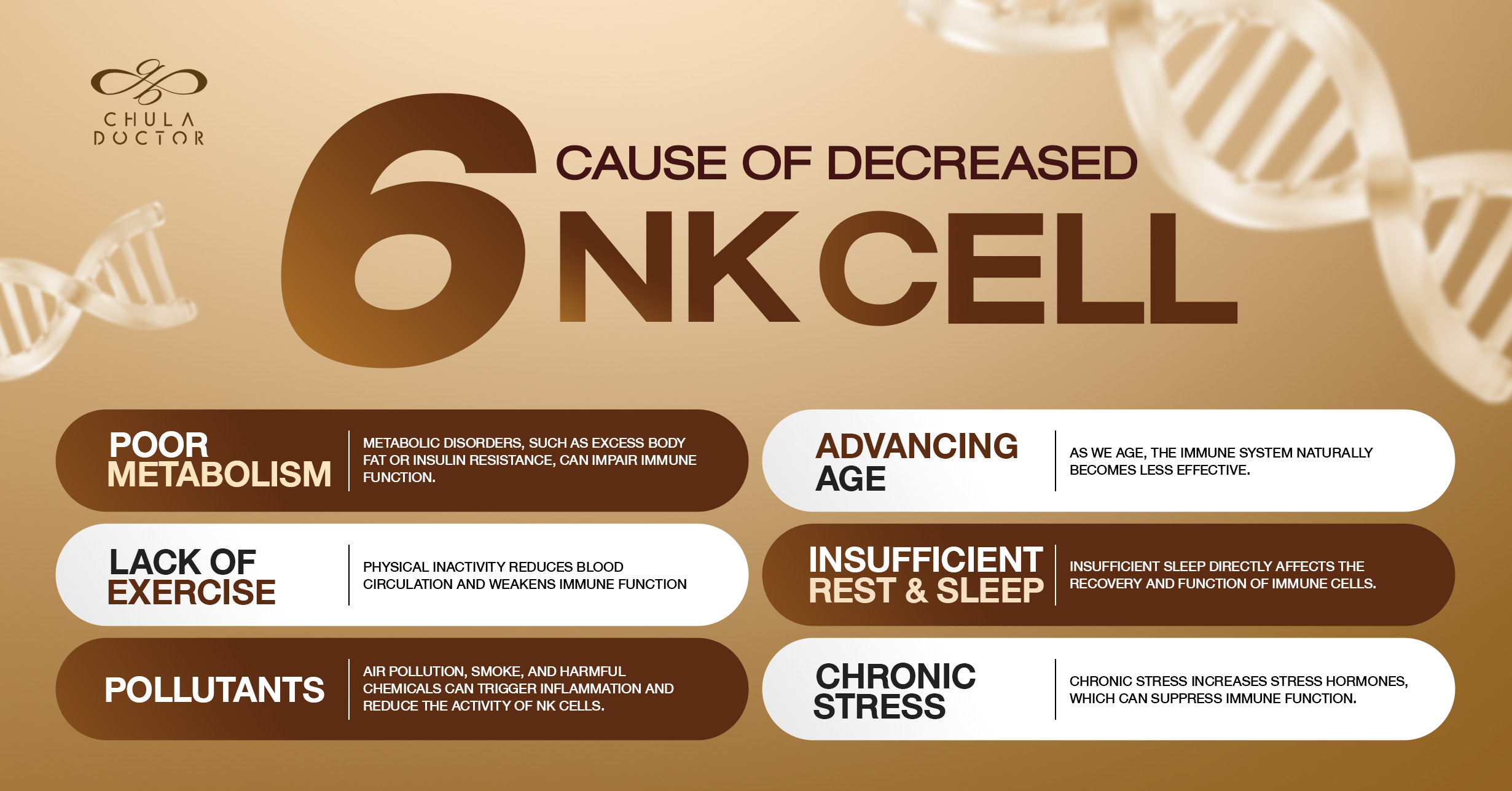
1. Poor Metabolic Health: Metabolic conditions such as excess body fat and insulin resistance can impair immune function and reduce the activity of an NK cell.
2. Aging: As we age, the immune system naturally becomes less efficient, which can affect the function of an NK cell.
3. Physical Inactivity: A lack of regular physical activity can reduce blood circulation and weaken immune function, limiting the effectiveness of an NK cell.
4. Inadequate Sleep: Not getting enough sleep can interfere with the body’s recovery process and impair the function of an NK cell.
5. Pollution and Environmental Toxins: Exposure to air pollution, cigarette smoke, and harmful chemicals can trigger inflammation and reduce the activity of an NK cell.
6. Chronic Stress: Long-term stress increases the production of stress hormones, which can suppress immune function and reduce the effectiveness of an NK cell.
These factors can weaken the immune system over time, reducing the body’s ability to defend itself against infections and other health threats.
Nowadays, more people focus on preventive healthcare and long-term wellness, understanding how the body’s natural defenses work has become increasingly important. One of the immune system’s most powerful protectors is the Natural Killer (NK). It is a specialized type of white blood cell that acts as the body’s first line of defense, quickly recognizing and eliminating virus-infected and abnormal cells.
In this article, you’ll get to know what NK cells are, how they support your immune system, what factors can affect their function, and simple ways to help keep your body’s natural defenses strong.
What Happens When NK Cell Activity Declines?
- Increased Susceptibility to Infections: The immune system becomes less effective at eliminating pathogens
- The body becomes less effective at removing abnormal cells.
- Slower Recovery and Increased Fatigue: The body cannot repair itself efficiently.
- Immune Imbalance: Some people may become more sensitive to allergens or other environmental triggers.
Who Is NK Cell Therapy Suitable For?
- People who lack sleep or often stay up late, with less time for recovery.
- People with heavy workloads or ongoing stress that affect immune function.
- People who get sick easily, catch colds often, or recover slowly.
- People aged 35 and above because their immune function naturally declines with age.
- People who want to take care of their health before problems occur.




Frequently Asked Questions
Q: What happens when NK Cell levels are low in the body?
A: Low levels of Natural Killer (NK) Cell may weaken immune function, making the body more susceptible to infections and slower recovery. It may also increase the risk of chronic inflammation, non-communicable diseases (NCDs) such as diabetes, high blood pressure, and high cholesterol, while reducing the body’s ability to eliminate abnormal cells, which may affect long-term health.
Q: Why is NK Cell important for the body?
A: People with low NK Cell levels or reduced NK Cell function may be more likely to experience health issues, such as frequent colds, recurring herpes infections, frequent fatigue, or a general lack of energy. They may also experience more severe illnesses that require medical attention and have a higher risk of serious health conditions, including cancer and Parkinson’s disease.
Q: What is the normal NK Cell level?
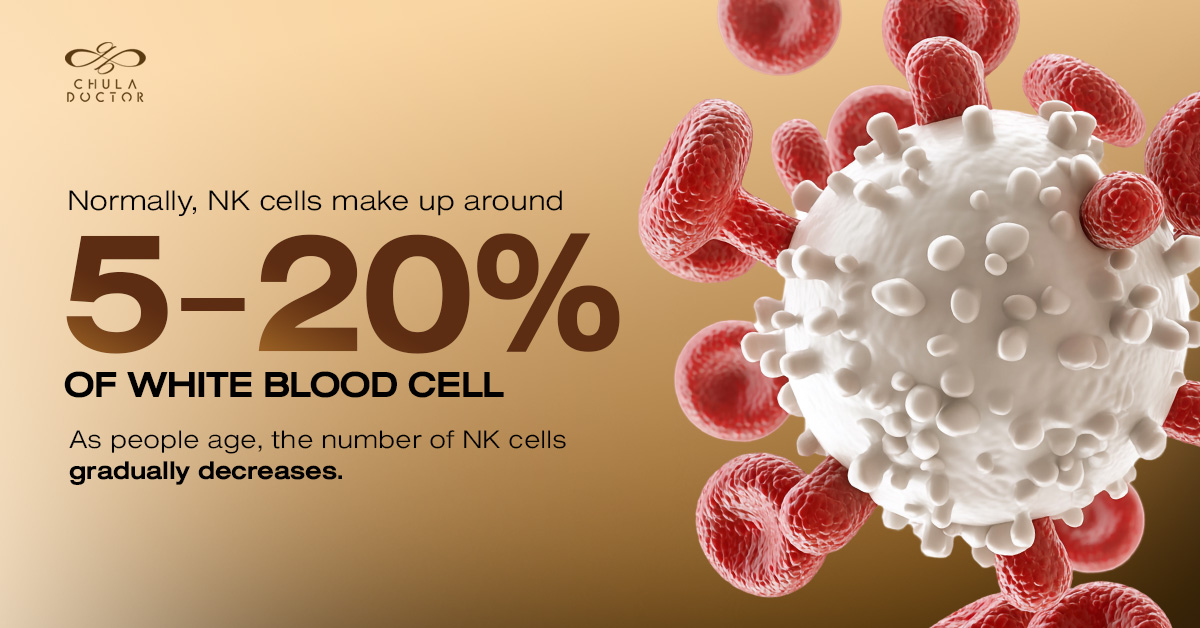
A: There is no standard NK Cell level that applies to everyone. Generally, NK Cells are approximately 5–20% of white blood cells, or around 90–600 cells/µL (microliter) of blood. The appropriate level may vary depending on age, overall health, and the testing methods used by different laboratories.
สนใจปรึกษาฟรี
รับคำปรึกษาและวอยเชอร์มูลค่า 10,000 บาท
** เงื่อนไขเป็นไปตามที่บริษัทกำหนด **
VIEW NEXT
WEIGHT CONTROL CENTER