Skip to main content





Have you ever wondered why some people diet strictly and train hard, yet the number on the scale barely moves? On top of that, they feel tired, get hungry often, and crave sweets all day. These signs may have nothing to do with laziness or a lack of discipline. They can be a quiet warning from inside the body, a condition doctors call insulin resistance.
When people first hear the term, the natural next question is: is insulin resistance dangerous? And if it is ignored and habits stay the same, what happens to the body over time? This article explains how the metabolic system works, what risks are hiding beneath the surface, and practical ways to get your health back on track.
What Is Insulin Resistance and How Does It Develop?
Before talking about the dangers, it helps to understand insulin itself. Insulin is a hormone made by the pancreas. It works like a “key” that unlocks cells throughout the body (such as muscle, fat, and liver cells) so that glucose in the bloodstream can enter and be burned for energy.
Insulin resistance develops when cells start responding less to insulin. Picture a rusty lock that the key can no longer turn easily. When glucose struggles to get into cells, more of it lingers in the blood.
Sensing that blood sugar is still high, the pancreas compensates by releasing more and more insulin to push glucose into cells. Early on, the pancreas may still keep blood sugar within the normal range, but the underlying problem has already quietly begun.


What Insulin Resistance Symptoms Should You Watch For?
What makes this metabolic problem concerning is that it rarely causes obvious illness in the early stages. Instead, the body sends small signals that are easy to overlook. If you think you may be at risk, look out for these insulin resistance symptoms:
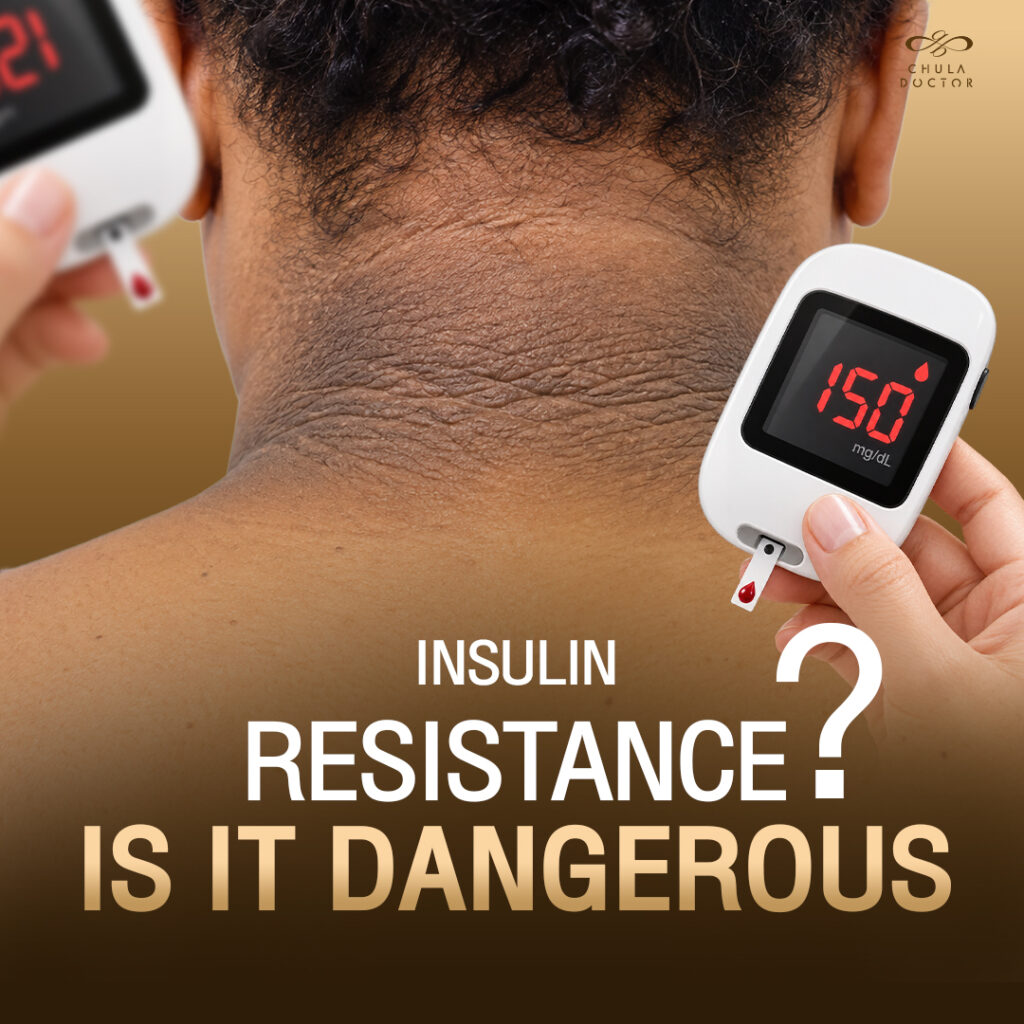
- Dark, thickened skin in body folds (Acanthosis Nigricans): An easy-to-spot skin sign. Look for dark brown or black velvety patches on the back of the neck, armpits, or groin that do not scrub off. They are caused by high insulin stimulating skin cells.
- Skin tags: Many small skin tags appearing around the neck or chest.
- Stubborn belly fat: Fat builds up around the waist and abdomen, and weight-loss efforts show little result.
- Frequent hunger and sugar cravings: Rapid swings in blood sugar and insulin make you hungry again soon after a full meal, with strong cravings for carbs and sweets.
- Chronic fatigue and brain fog: Feeling sleepy and sluggish, especially in the afternoon or after a large carb-heavy meal.
Is Insulin Resistance Dangerous, and What Happens If It Is Left Untreated?
So, is insulin resistance dangerous? Medically speaking, it can be if left unmanaged, because it is an early step linked to several chronic diseases. Left untreated, it may lead to the following problems.
1. Progression to Type 2 Diabetes
When cells resist insulin, the pancreas has to work harder to make up the difference. If this continues for years, the pancreas becomes worn out and can no longer produce enough insulin. Blood sugar then stays chronically high, leading to type 2 diabetes, a long-term condition that needs ongoing care.
2. Higher Risk of Heart and Blood Vessel Disease
Insulin resistance is linked to chronic inflammation of the blood vessel walls, which lose their flexibility. It also tends to raise triglycerides, lower HDL (“good”) cholesterol, and shift LDL (“bad”) cholesterol toward small, dense particles that clog arteries more easily. Over time this narrows the arteries and raises the risk of heart attack and stroke.
3. Polycystic Ovary Syndrome (PCOS) in Women
Abnormally high insulin stimulates the ovaries to produce excess male hormones (androgens). This disrupts ovulation and causes irregular periods, persistent acne, and excess hair growth. It is one of the key mechanisms behind PCOS and can affect fertility later on.
4. Fatty Liver Disease (NAFLD / MASLD)
When the body cannot use glucose normally, the liver converts the excess into fat and stores it in liver tissue. Left unchecked, this can lead to chronic liver inflammation and eventually cirrhosis, even in people who never drink alcohol.
5. A Possible Link to Alzheimer’s Disease
Some researchers have described Alzheimer’s disease as “type 3 diabetes,” because brain cells that resist insulin appear to use energy less effectively. This may speed up brain cell decline and affect memory and nerve function. The link is still being studied.
Who Is Most at Risk of Insulin Resistance?
Anyone can develop this condition, but people with the following risk factors are more likely to and should consider a blood test to assess their risk:
- People who are overweight, obese, or have a large waist circumference
- People who rarely exercise or lead a sedentary lifestyle
- People with a family history of type 2 diabetes
- People with high blood pressure or high triglycerides
- Women with a history of gestational diabetes or PCOS
What Does Insulin Resistance Treatment Involve?
The good news is that in many cases this condition can be improved and even reversed, especially when caught early and tackled with serious lifestyle changes before the pancreas wears down. Effective insulin resistance treatment requires consistency and a whole-lifestyle approach:
1. Dietary Changes
- Cut back on sugar and refined carbs: The first rule. Limit sugary drinks and pastries, and switch to complex carbohydrates such as brown rice, oats, and quinoa, which have a low glycemic index (Low GI).
- Add protein and healthy fats: Quality protein (lean meat, fish, eggs, tofu) and healthy fats (olive oil, avocado) keep you full longer, reduce snacking, and trigger less insulin than starches and sugars.
- Eat more fiber: Leafy greens slow the absorption of sugar into the bloodstream and ease the load on the pancreas.
2. Intermittent Fasting (IF)
Time-restricted eating, such as the 16/8 method, has gained attention as a useful tool. During the 16-hour fast, insulin levels fall, giving cells a break and a chance to gradually regain sensitivity. Anyone on glucose-lowering medication, pregnant women, or people with chronic conditions should consult a doctor before trying IF.
3. Regular Exercise
- Weight training: Muscle is the body’s main user of glucose. Building muscle helps the body pull sugar from the blood without relying as heavily on insulin.
- Cardio: Brisk walking, running, or swimming for at least 150 minutes a week helps reduce visceral fat, a source of inflammatory substances.
4. Manage Stress and Sleep
Aim for 7-8 hours of sleep each night. Sleep loss and chronic stress trigger the release of cortisol, a hormone that counteracts insulin and raises blood sugar.
What Should You Do and Avoid to Restore Your Metabolism?
| Area | Do | Avoid |
| Food and nutrition | Complex carbs, protein, fiber | Sweets, refined flour |
| Exercise | Regular strength and cardio training | Prolonged sitting, little movement |
| Lifestyle | Sleep 7-8 hrs, IF, stress management | Sleep loss, all-day snacking |
What Are Common Questions About Insulin Resistance?
Can thin people have insulin resistance?
Yes. Even at a normal body weight, people with fat stored around the organs or in the liver, low activity levels, poor sleep, or a family history of diabetes can develop it. Body shape alone is not a reliable guide.
How is insulin resistance diagnosed?
Usually through blood tests after fasting for at least 8 hours, measuring glucose, insulin, and HbA1c, then calculating HOMA-IR. A doctor interprets the results together with waist size, blood lipids, and blood pressure.
Does insulin resistance really make weight loss harder?
To some extent, yes. High insulin suppresses fat breakdown and promotes fat storage, and frequent hunger makes weight control harder. As insulin sensitivity improves through diet, exercise, and sleep, weight loss usually becomes easier too.
How is insulin resistance different from diabetes?
Insulin resistance means cells respond less to insulin, while blood sugar may still be normal because the pancreas compensates. Type 2 diabetes develops when that compensation is no longer enough and blood sugar reaches diagnostic levels.
Can insulin resistance be cured?
In many cases it can be improved to near-normal levels if addressed early. However, it can return if old habits come back, so it is best managed as a long-term lifestyle change.

How Should You Start Taking Care of Yourself?
Metabolic problems are not limited to people who are overweight. Asking whether insulin resistance is dangerous is a smart first step toward protecting your health. Left unaddressed, this silent threat can affect vital organs throughout the body and lead to diabetes, heart disease, and other chronic conditions.
If you notice insulin resistance symptoms, start putting insulin resistance treatment into practice in daily life: eat a balanced diet lower in sugar, fat, and salt, build muscle through exercise, and get enough rest.
It is also worth getting an annual health check that includes fasting insulin and a HOMA-IR calculation, so you and your doctor can assess your risk and plan prevention together. Taking care of yourself starting today is an investment in long-term health.